Key facts:
-
The petrodollar standard is running out of steam with China’s negotiations with Saudi Arabia.
-
There is a crisis of confidence in the dollar as a result of US sanctions on Russia.
An event of great importance is taking place on a world level: the dollar has weakened as an exchange currency in the commodity market, which opens the possibility that a new world monetary reserve will be decided. While this is happening, China’s renminbi (better known as the yuan) and bitcoin are on the table as two options to become the next world currency.
To understand why and how all this is happening, we must first do a brief historical review and go back to the last century. By the early 1900s, the monetary system that governed the world was very different, since it was based on gold reserves. Each country undertook to guarantee that its currencies were worth a certain amount of gold that was under its protection. However, with the outbreak of two world wars, the international economy underwent a violent transformation and the gold standard saw its end.
By 1944 an agreement of great importance for the financial memory of the world would be signed, the Bretton Woods. This event gave birth to the World Bank, the International Monetary Fund (IMF) and established the use of the dollar as the world currency. The idea was that the United States would become an issuer of currencies backed by its important gold reserves, and that this money could be used by other countries to market goods and services.
However, the idyllic system proposed by Bretton Woods did not last long, because in the 1970s we would see the beginning of the financial chaos that we still carry today. The US president at the time, Richard Nixon, delinked the dollar from the gold standard during a period of inflation caused by the US war in Vietnam. This produced an international financial collapse, as well as many tensions in foreign countries, where some decided to float their currencies on the open market to support the value of their economies.
This measure determined the beginning of the depreciation of the US dollar, although it continued to be the currency with the greatest dominance in the international market. Currently, 90% of currency trading is done with the dollar, and it remains the most common reserve currency, accounting for 60% of world reserves. A much higher percentage than that of other highly relevant currencies, such as the euro, the yen, the renminbi and the Canadian dollar.
But… what is the reason for the continued success of the dollar as a currency of exchange if the economic decisions of the United States in recent years have not been the most successful? Well, in general terms, this has been determined by the political power of the American power and its international relations, with oil being a very important piece in its use as a world currency. In addition to all of the above, to understand the current situation it is important to know a concept: the petrodollar.
Oil, the cornerstone of market dominance
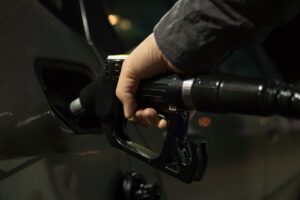
Also in the Nixon government and with the intention of financing the war without depending on gold reserves, the United States reached an agreement with Saudi Arabia so that the oil of this country would be sold in exchange for dollars. Alex Gladstein, director of the Human Rights Foundation, explains that through these negotiations the American country was able to accumulate oil and that the oil-producing nations invested their profits in the US debt .
To make a long story short: the United States achieved what it was looking for, since shortly after the agreement with Saudi Arabia, OPEC – which is one of the most important organizations of oil countries in the world – also agreed to sell its products only in exchange for dollars. In this way, almost 80% of crude oil production worldwide is still traded under the petrodollar system. Nations of the European Union, China and even Russia have been forced to have the dollar to buy or sell oil. Yes, in a nutshell, they have to use a foreign currency to price their own raw materials or buy from other states.
And although on several occasions there have been attempts to overthrow the petrodollar pattern, the reality is that the United States has jealously protected its dominance in this market. Let’s take an example, in the 2000s one of the bloodiest wars described as “oil wars” broke out, after Saddam Hussein, president of Iraq, tried to sell his crude oil to Europe in exchange for euros. Although the US government argues that the war started because of Iraq’s terrorist connections and its development of weapons of mass destruction (atomic bombs). However, with the end of the war for some it became clear that the hegemony of petrodollars was protected.
Venezuela has been another country that recently tried to market its oil with a currency other than the dollar, in this case the Chinese yuan. Crude oil was quoted in different international currencies, trying to disassociate itself from the US government that had recently imposed sanctions on the country, but at present this had no major repercussions. And even today the Caribbean country is once again in talks with the United States to market its crude oil.
But today, the dominance of the petrodollar (and the dollar as a world currency) is facing one of its greatest threats since the moment of its creation. China, which is the buyer of 25% of the oil generated in Saudi Arabia, is in talks with the country to close the trade in crude oil in yuan. This is a discussion that has been going on for years without a resounding answer, but today China’s political relations with this kingdom in the Middle East are stronger than ever, while US relations with the Arab country have weakened. .
With this move between China and Saudi Arabia, it is clear that the Asian giant wants to take away ground from the dollar as the world currency and who will also impose a petroyuan standard. It is not the first time that China has tried to introduce oil contracts quoted with the yuan to the market, just as the government has promoted a fierce campaign for the adoption of its cryptocurrency (the digital yuan) as the new currency of commerce.
If we take into account the power that China has in world trade, it is obvious that this movement endangers the hegemony of the dollar. Additionally, the war that is taking place in Ukraine as a result of the Russian invasion can also change the rules of the game and worsen the already precarious situation that the US dollar is experiencing.
Collapse of confidence and change to a new monetary order
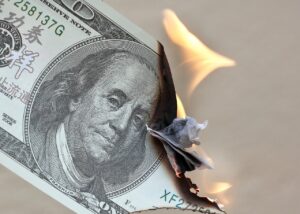
If the floor of the petrodollars is collapsing, the confidence generated by the traditional financial system and the dollar as a world reserve is also cracking after years of erosion. With the constant sanctions that the United States has imposed on countries such as China, Venezuela, North Korea, Iran and Russia, the message has been clear and forceful for the citizens and leaders of the world. The money does not belong to everyone, but to the one who issues it, protects it and distributes it. Ergo, the United States .
This represents, statistically, that a country of just over 300 million inhabitants can control the lives of the more than 7 billion that are on earth and that (possibly) do not share the same culture, the same geographical reality, or much less the same economic benefits. This, for obvious reasons, generates an imbalance in world finances that different powers want to correct by promoting the use of their own currencies (as is the case with China).
As if that were not enough, the war has also generated a new economic climate (due to sanctions) that brings new elements to the table, such as the blockade of Russian oil. Russia is another of the countries that leads the export of crude oil worldwide, along with the production of gas and other raw materials. However, because the entire country was blocked from accessing dollars through the SWIFT system, the Eastern European nation has been unable to benefit from the current rise in oil prices, the price of which has plummeted, according to data. of Ecoanalytics.
For financial experts like Zoltan Pozsar, from Creddit Suisse, this is the beginning of an economic crisis that will generate a new monetary order , baptizing it as «Bretton Woods III». Poszar predicts that, due to the current weakness of the dollar and the euro —as well as the lack of confidence they are going through— it could generate a debacle in the world commodity market. Due to this, interest in foreign money grows over the internal money that each country has, with products such as flour, oil, gold and gas rising more and more in price.
The analyst points out that, because the raw material from Russia was left out of the game, the value of all the raw material from the other countries has grown. Those who are allied with Europe and the United States will stop doing business with the sanctioned country. However, powers like China, which are decoupled from Western interests and do not want to depend on the dollar, could see Russia’s raw material as an opportunity to continue carrying out their petroyuan contracts and support their currencies such as oil. (and gas) from Russia.
For Poszar, everything that is happening today is the prelude to a new era of money, in which the renminbi will emerge stronger and the dollars will be seriously affected. Even so, he does not believe that China is the only strong piece in this chess game, but instead proposes that if Bitcoin manages to survive this situation, it could also benefit greatly.
Does Bitcoin have life in that scenario and who will stay with the reign?
It is not yet known who will get the title of “the world currency” in case the dollar finally loses its power, the answer is probably not as simple as simply saying the yuan, the yen, the euro or bitcoin. However, if we must take into account that in a globalized world like the one we live in today, going through a huge institutional and confidence crisis, it is difficult for a single currency to prevail as the dollar did in the past.
China also has many “buts” in its financial system because, although it knows how to take advantage of the situation, there is great resistance in the West to accept the way in which the government of the Asian giant works. With the possibility of losing privacy over your finances and freedom of decision, there are not a few people who reject the use of the digital yuan and any form of adoption of the Chinese monetary system. In the case of the yen or the euro, they do not turn out to be the favorite options nor are they powerful enough to generate the expectation that they will be the substitutes for the dollar.
Likewise, it must be taken into account that, although the dollar is weakened, the United States continues to be a country of great political and economic influence, so it will not be so easy for an abrupt change to occur in the world economy without the American power of the battle to stay.
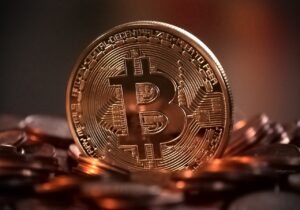
In the midst of all this context, it is curious that a new name has crept into the table of candidates to become a reserve currency. With the adoption of bitcoin (BTC) as legal tender in El Salvador, Satoshi Nakamoto’s cryptocurrency has reached the governmental leadership and is shown as an option to store value that is supported by those who seek greater freedom, privacy and decentralization in world finance.
Alex Gladstein, in the aforementioned article, points out that “bitcoin is an asset that is competing to become the new world reserve” in a context where money is centralized in the hands of a dome. With people thinking that this way of using money is unreliable and fair, Bitcoin is presented as an option that cannot be controlled by a few for manipulation or censorship, just as it is impossible to change its monetary policies to benefit one. group of people above others.
In an ideal world, where all humans have the right to choose what money to use and enjoy the same benefits of the financial system, it is likely that Bitcoin will be the currency that governs the world and not a currency issued by a Central Bank with its own agenda. However, we must also be realistic that cryptocurrency has not even reached 20 years of its creation and is still a very niche form of money, which may not yet be ready for the level of demand that it has. it would generate him to become the new world reserve .
In conclusion: we will have to wait and see what the current power struggles decide, but it is obvious that money as we know it will never be the same again and that it will be difficult for the dollar to emerge victorious from the current crisis in which it finds itself submerged.